
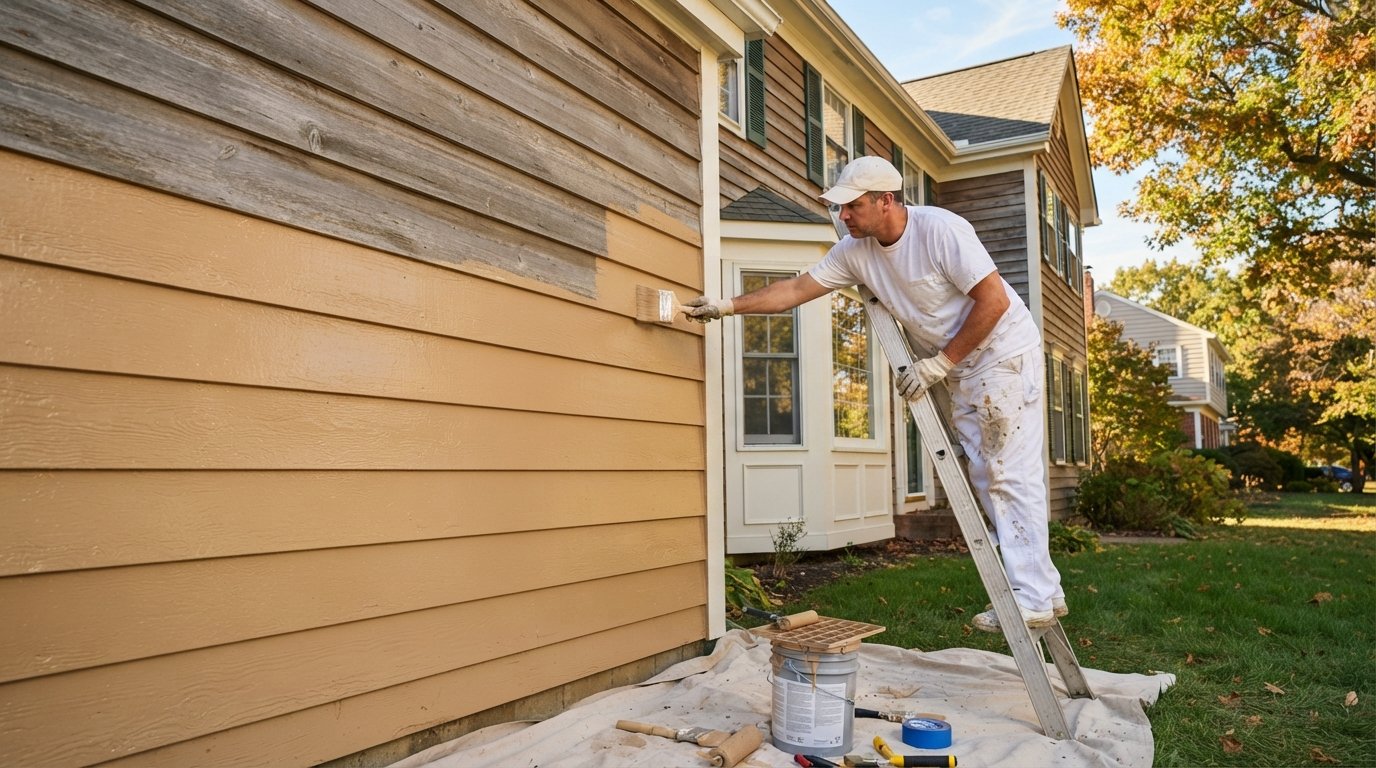
Choosing Durable Exterior Paint for Longevity: 2026 Guide
Choosing durable exterior paint for longevity protects your siding and stretches repaint cycles from five years to fifteen with the right formula.

By Elena John
Learn more about Exterior Painting for guides, costs, and what to expect.
Compare Exterior Painting Pros Near You

Enter your ZIP code to compare top-rated local professionals and request free quotes.
Your home's exterior takes a beating every single day. Sun, rain, snow, humidity, and temperature swings all work together to break down paint film, and when that film fails, the damage does not stop at the surface. Moisture seeps into wood, siding warps, and repair bills climb fast. Choosing durable exterior paint for longevity is one of the smartest financial decisions a homeowner can make, because the right coating can stretch a repaint cycle from five years to fifteen and protect the structure underneath the whole time.
This guide breaks down what actually makes exterior paint last, which formulas and finishes perform best in different climates, and how to plan the job so your investment pays off. It is written for homeowners who want real answers, not marketing slogans.
Why Exterior Paint Fails Before Its Time
Paint failure rarely happens because the paint itself was bad. More often, something underneath or around the coating undermined it. Understanding the common failure modes helps you avoid repeating them.
The most frequent culprits are moisture intrusion, poor surface preparation, and applying paint in the wrong conditions. Moisture trapped behind the paint film pushes outward and causes blistering or peeling. A dusty, chalky, or glossy surface prevents the new coat from bonding, so it flakes off within a season or two. And painting in direct sun or high humidity stops the film from curing properly, leaving it soft and vulnerable.
Ultraviolet radiation is the other silent killer. UV light breaks down the chemical bonds in the resin binder, causing colors to fade and the surface to chalk. Lower-quality paints use cheaper binders that degrade quickly under UV exposure, which is why a budget paint job on a south-facing wall can look tired in just a few years.
If you want a clear picture of what a quality job should cost before you commit, it helps to understand how professionals build their numbers. The guide on getting an accurate exterior painting estimate walks through what separates a realistic bid from a lowball one, including prep work, primer, and labor hours.
What Makes Exterior Paint Durable
Durability comes down to chemistry. Every can of exterior paint contains four main ingredients: resin (the binder), pigments, solvents, and additives. The resin is the star of the show. It forms the continuous film that holds everything together and determines how well the paint resists UV, moisture, and abrasion.
Premium exterior paints use 100 percent acrylic resin, which outperforms vinyl acrylic and styrene-butadiene blends in almost every category that matters outdoors. Acrylic resin stays flexible as temperatures swing, resists fading, and adheres well to a range of substrates. If a label says "acrylic latex" without specifying 100 percent acrylic, it is likely a blend, and it will not last as long.
Pigments matter too. Titanium dioxide provides hiding power and UV resistance, while color-fast organic pigments hold their hue longer. Additives such as mildewcides, UV stabilizers, and rheology modifiers round out the formula, keeping the paint from sagging, growing mold, or breaking down under sun exposure.
Here is what to look for on the label when durability is the priority:
- 100 percent acrylic resin, not a vinyl or styrene blend
- Mildewcide included in the formula, not sold as a separate additive
- A stated dry film thickness and coverage rate per gallon
- Manufacturer warranty of 15 years or more on the finish
- Low VOC content for easier application and better indoor air quality near windows and doors
Warranty length is a useful shortcut, but read the fine print. Some manufacturers void coverage if you skip a specific primer or apply the paint below a minimum temperature. A long warranty only helps if you follow the application rules.
Matching Paint Type to Your Climate and Siding
There is no single best exterior paint for every home. The right choice depends on where you live and what your house is made of. A coating that performs beautifully in dry Denver heat may fail prematurely in Miami humidity, and vice versa.
In hot, sunny climates, UV resistance and fade resistance top the list. Look for acrylic paints with high titanium dioxide content and a satin or low-sheen finish, which reflects more light than flat paint and holds up better to intense sun. In humid, rainy regions, moisture management and mildew resistance matter most. Acrylic latex breathes, allowing interior moisture vapor to escape rather than pushing the paint off the wall, and mildewcide additives keep dark streaks from forming on north-facing surfaces.
Freeze-thaw climates demand flexibility. Paint that becomes brittle in cold weather will crack as the substrate expands and contracts. High-quality acrylics remain elastic at low temperatures, which is why they are the standard recommendation in northern states.
Substrate compatibility is just as important. Wood siding, fiber cement, stucco, brick, and metal each have different absorption rates and adhesion requirements. Fiber cement, for example, needs a primer specifically formulated for its alkaline surface. Bare wood needs a penetrating primer that seals knots and tannins. Painting over a previously painted surface usually requires a bonding primer if the old coating is glossy.
When in doubt, ask a professional. Platforms like Repairmen connect homeowners with vetted local pros who can assess your siding and recommend the right system for your climate, which removes much of the guesswork from the decision.
Sheen, Color, and Their Hidden Impact on Longevity
Sheen is not just a style choice. It affects how well the paint resists dirt, moisture, and UV damage. Flat paints hide imperfections well but tend to chalk and hold dirt. Satin and eggshell finishes offer a balance of cleanability and durability for most siding. Semi-gloss and gloss are the hardest and most washable, making them ideal for trim, doors, and shutters, though they highlight surface imperfections on large flat walls.
Color plays a role too, and it is one many homeowners overlook. Dark colors absorb heat, which accelerates film degradation and can cause siding to warp in extreme cases. On sunny exposures, a dark navy or charcoal wall can reach surface temperatures dozens of degrees higher than a light beige wall. If you love a dark palette, choose a premium acrylic formulated for deep-base colors and expect a somewhat shorter repaint cycle.
Light colors, especially whites and pastels, reflect heat and tend to last longer in hot climates. They also hide chalk better, so gradual UV breakdown is less obvious. If longevity is the goal and you are flexible on color, leaning lighter is a practical advantage.
Surface Preparation: The Step That Decides Everything
You can buy the most expensive paint on the shelf, but if the surface is not properly prepared, it will fail. Prep work typically consumes 60 to 80 percent of a professional paint job's labor hours, and there is a reason for that.
The process follows a logical sequence. First, the surface is cleaned to remove dirt, chalk, mold, and mildew. Pressure washing is common, but it must be done carefully to avoid driving water behind siding. Next comes scraping and sanding to remove loose paint and feather rough edges. Any rot or damaged substrate is repaired and allowed to dry completely. Then bare spots and repaired areas are primed with a compatible primer. Finally, caulk is applied around windows, doors, and trim to seal gaps before the finish coats go on.
Skipping or rushing any of these steps shortens the life of the paint. Caulking after painting, for example, leaves unsealed joints that let water in. Priming bare wood with the wrong product can cause tannin bleed that stains the finish coat within months.
Timing matters as well. Most exterior paints need surface and air temperatures between 50 and 85 degrees Fahrenheit, with humidity below 85 percent, and no rain in the forecast for at least 24 hours. Painting in the wrong window can ruin an otherwise perfect job.
Primer, Number of Coats, and Dry Film Thickness
Primer is not optional on bare or repaired surfaces, and it is often worth using even over existing paint if the old coating is chalky or the color change is dramatic. A good primer blocks stains, seals porous substrates, and gives the topcoat something to grip.
Two finish coats are the industry standard for a reason. A single coat rarely achieves the dry film thickness needed for full UV and moisture protection, even if it looks opaque. Two coats also ensure uniform color and better resistance to cracking. On high-exposure walls, some professionals recommend a third coat for maximum durability, though the cost-benefit depends on the substrate and climate.
Paint labels specify a dry film thickness, usually measured in mils. Achieving that thickness requires applying the paint at the recommended spread rate, which is printed on the can as square feet per gallon. Stretching paint too thin to save money is one of the most common causes of premature failure, and it is a false economy.
How to Vet a Painting Contractor for a Long-Lasting Job
Even the best paint fails in the hands of an inexperienced or careless applicator. Hiring the right professional is arguably as important as choosing the right product.
Start by verifying licensing and insurance. Ask for proof of liability coverage and workers compensation, and confirm the policy is current. Then request references from jobs completed at least three to five years ago, not just recent ones. A contractor whose work still looks good after several seasons is a much stronger signal than a fresh portfolio.
Get at least three written estimates that break down prep work, primer, number of coats, paint brand and line, and warranty terms. Bids that are vague about prep or that quote a single coat should raise red flags. Compare the scope, not just the bottom line.
Ask specifically how they handle surface preparation and what they do if they find rot or moisture damage once siding is exposed. A good contractor will explain the contingency plan and price it transparently rather than surprising you with change orders later.
Finally, confirm the warranty covers both materials and labor. Manufacturer warranties cover the paint, but if application error caused the failure, only the contractor's workmanship warranty will protect you. Get that warranty in writing before work begins.
Maintenance Habits That Extend Paint Life
A durable paint job still benefits from basic care. Annual inspections catch small problems before they become expensive ones. Look for hairline cracks, blistering, peeling, and areas where caulk has pulled away from trim. Addressing these early with spot repairs can add years to the overall cycle.
Washing the exterior once a year removes dirt and mildew that can degrade the finish. A gentle rinse with a garden hose and a soft brush is usually enough. Avoid harsh pressure washing, which can force water behind siding and damage the paint film.
Keep vegetation trimmed back from the walls. Shrubs and trees trap moisture against the surface and create shaded, damp conditions where mildew thrives. Fix gutter leaks promptly, since water running down a wall will eventually break down the coating no matter how good it is.
Touch up scratches and chips as soon as you notice them. Bare spots expose the substrate to moisture and UV, and small repairs are far cheaper than repainting an entire wall.
Balancing Cost, Quality, and Repaint Frequency
Premium exterior paint costs more per gallon, sometimes 50 to 100 percent more than budget options. The question is whether that premium pays off, and the math usually says yes.
A cheap paint job that needs repainting every five to seven years costs more over a 20-year period than a quality job that lasts 12 to 15 years, even before you factor in the hassle and the risk of substrate damage. Add in the labor cost, which dominates the total price of any paint job, and the case for premium paint becomes even stronger. Labor does not get cheaper when you repaint more often.
The smartest approach is to invest in the best paint you can afford, pair it with thorough preparation, and hire a contractor who will apply it correctly. That combination delivers the longest service life and the best protection for your home.
Choosing durable exterior paint for longevity is ultimately about planning. Pick the right formula for your climate and siding, insist on proper prep, apply the recommended number of coats at the right thickness, and maintain the surface between repaints. Do those things, and your exterior will look better, last longer, and cost less to own over time.