
Compare Contractor Estimates Without Hidden Fees
Learn how to compare contractor estimates to avoid hidden fees, spot red flags, and choose the best value for your home project.

By Elena John
Learn more about Exterior Painting for guides, costs, and what to expect.
Compare Exterior Painting Pros Near You

Enter your ZIP code to compare top-rated local professionals and request free quotes.
When you receive multiple bids for a home improvement project, the lowest number might look like the obvious winner. But contractor estimates are rarely that simple. Two professionals can quote the same job with a $5,000 difference, and the cheaper option could end up costing you more in the long run. Learning how to compare contractor estimates properly can save you thousands of dollars and months of headaches. This guide will walk you through the exact process of evaluating bids line by line, spotting red flags, and choosing the contractor who delivers real value, not just the lowest price.
Why a Low Bid Can Be a Red Flag
It is natural to gravitate toward the lowest estimate, especially when you are working within a tight budget. However, an unusually low bid often signals that something is missing. The contractor might not have visited your property, may be planning to use subpar materials, or could be cutting corners on labor. In many cases, the low bidder simply does not understand the full scope of work required, which means change orders later.
On the other hand, the highest bid is not automatically the best either. Some contractors inflate their prices because they do not want the job, or they rely on high-pressure sales tactics. The sweet spot usually lies in the middle, but only if the estimate includes clear, detailed specifications. As you start comparing bids, remember that your goal is not to find the cheapest option. Your goal is to find the most reliable contractor who can deliver the quality you expect at a fair price.
To get a fair starting point, you need to request estimates from at least three different contractors. Use a platform like FreeQuotes.Contractors to connect with pre-vetted local professionals quickly. This gives you a solid baseline for comparison without spending hours on the phone.
What to Look for in Every Estimate
Before you can compare anything, you need to understand what a complete estimate should contain. A professional estimate is more than just a total price. It is a detailed breakdown of every cost involved, from materials to labor to cleanup. Here are the essential components every estimate should include:
- Scope of Work: A clear description of every task the contractor will perform, including prep work, installation, and cleanup.
- Materials List: Specific brands, models, or grades of materials to be used, not just generic terms like “quality lumber” or “standard tiles.”
- Labor Costs: An estimate of the hours required and the hourly rate, or a fixed price for the labor portion of the job.
- Timeline: Start and completion dates, plus milestones for larger projects.
- Payment Schedule: When payments are due, how much is required upfront, and the final payment terms.
- Warranty Information: What is covered by the contractor’s warranty and for how long, plus any manufacturer warranties on materials.
- Permit and Inspection Fees: Who is responsible for pulling permits and covering the associated costs.
If an estimate lacks any of these details, ask the contractor for clarification before you move forward. A vague estimate is a major red flag, because it gives the contractor room to charge you more later. For example, if the estimate says “install new sink” without specifying the model, the contractor could install a basic builder-grade sink and then charge you extra for the upgrade you wanted.
How to Compare Contractor Estimates Line by Line
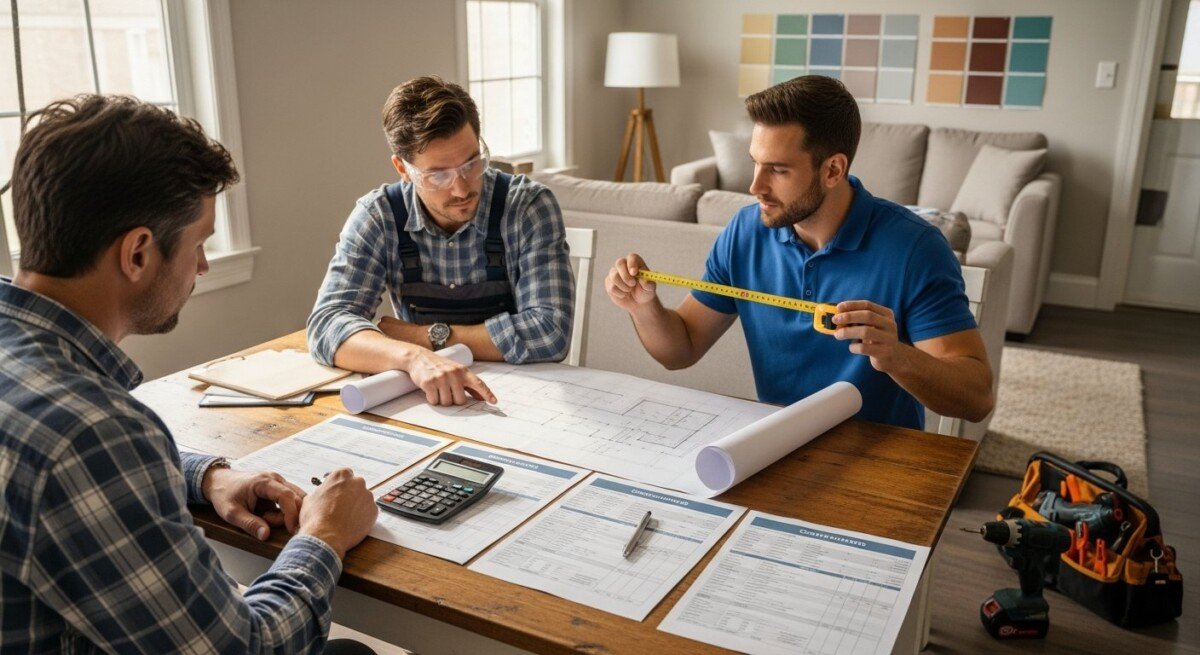
Once you have three or more detailed estimates in hand, it is time to put them side by side. The easiest way to do this is to create a simple spreadsheet or use a notebook with columns for each contractor. Break the project down into major categories, such as demolition, materials, labor, permits, and cleanup. Then, compare how each contractor handles each category.
Here is a step-by-step process for comparing estimates effectively:
- Check the Scope First: Make sure every estimate covers the same work. If one contractor includes moving a load-bearing wall and another does not, you are not comparing apples to apples.
- Compare Materials: Look at the specific brands and models listed. A bid that uses high-end materials will naturally cost more, but it may be worth it if you want durability.
- Evaluate Labor Costs: A contractor who charges a higher hourly rate but works faster may end up being cheaper than one who charges less but takes twice as long.
- Look for Hidden Fees: Check for line items like “dumpster rental,” “travel fees,” or “miscellaneous supplies.” These can add hundreds of dollars to the final bill.
- Review the Payment Schedule: Avoid contractors who demand more than 10% to 20% upfront. A large deposit can leave you exposed if the contractor abandons the project.
As you compare, do not be afraid to ask contractors to adjust their bids. For example, if one contractor quoted a higher price for a better brand of windows, ask the other contractors if they can match that brand for the same price. This kind of negotiation can help you level the playing field and get the best value.
For a deeper dive into this process, check out our guide on comparing contractor bids, which includes a downloadable checklist you can use during your review.
Spotting Hidden Costs and Omissions
Hidden costs are the biggest reason why final bills exceed original estimates. A contractor might leave out a critical step to make their bid look more attractive, only to add it later as a change order. Common omissions include:
- Demolition and debris removal
- Moving or disconnecting appliances and fixtures
- Subfloor repair or leveling
- Electrical or plumbing rough-ins
- Painting or finishing work
- Final inspection fees
To protect yourself, ask every contractor to confirm that their estimate covers the complete scope of work, including all the items above. If a contractor refuses to provide a detailed breakdown, that is a sign they may be hiding something. You can also ask for a list of all possible change orders and their estimated costs, so you are not surprised later.
Another common hidden cost is the price of materials. A contractor might quote a low price for materials but then use cheaper substitutes without telling you. Always ask for the exact brand, model, and grade of every material specified in the estimate. If the contractor says “or equivalent,” ask them to define what that means in writing.
The Importance of Terms and Conditions
The terms and conditions attached to an estimate are just as important as the numbers. Pay close attention to the fine print regarding changes, cancellations, and dispute resolution. A contractor who includes a binding arbitration clause may limit your legal options if something goes wrong. Similarly, a clause that allows the contractor to charge interest on late payments might be reasonable, but a clause that grants them a lien on your home for non-payment is a serious commitment.
Read the entire contract before signing, and do not be afraid to negotiate terms. For example, you can ask for a 5% retention fee, which means you hold back 5% of the final payment until you have inspected the work and confirmed it is complete. This gives you leverage if there are any issues after the job is finished.
If you are unsure about any clause, consult a lawyer or a trusted advisor. It is much cheaper to spend a few hundred dollars on legal advice than to fight a costly dispute later. For more guidance on reviewing contracts, our article on analyzing estimates without overpaying offers practical tips for protecting your budget.
How to Evaluate the Contractor, Not Just the Price
Price is only one part of the equation. The contractor’s reputation, experience, and communication style are equally important. A slightly higher bid from a contractor with a stellar track record is often a better investment than a low bid from someone with no references.
Before making your final decision, do the following:
- Call at least three references from recent projects similar to yours.
- Check online reviews on Google, Yelp, and the Better Business Bureau.
- Verify the contractor’s license and insurance, including liability and workers’ compensation.
- Ask about their experience with your specific type of project, such as bathroom remodeling or roofing.
- Assess their communication: do they respond promptly and answer your questions clearly?
Also, consider how the contractor interacts with you during the estimate process. A professional who takes the time to explain their bid and answer your questions is likely to be more responsive during the project. On the other hand, a contractor who rushes through the estimate or pressures you to sign quickly may be more difficult to work with later.
For a more detailed framework on evaluating contractors, our pro-level comparison guide includes a scoring system that weights price, quality, and reliability.
Making the Final Decision
After you have reviewed all the estimates, checked references, and verified credentials, it is time to make your choice. Trust your instincts. If a contractor’s bid feels too good to be true, it probably is. If you feel pressured or uncomfortable during the sales process, that feeling will likely continue during the project.
Once you have selected a contractor, do not sign the contract until you have both agreed on every detail in writing. Make sure the final contract includes the exact scope of work, all materials, the payment schedule, and the timeline. Keep a copy of the estimate attached to the contract so there is no confusion later.
Finally, remember that the cheapest bid is not always the best value. A fair price for quality work is what you are really looking for. By following the steps in this guide, you can confidently compare contractor estimates and choose a professional who will deliver a successful project.
If you are just starting your search, get free, competitive quotes from pre-vetted contractors through FreeQuotes.Contractors. Their platform simplifies the process of finding and comparing local professionals, so you can focus on making the right choice for your home and your budget.
Learn more about Exterior Painting for guides, costs, and what to expect.
Compare Exterior Painting Pros Near You
Enter your ZIP code to compare top-rated local professionals and request free quotes.