
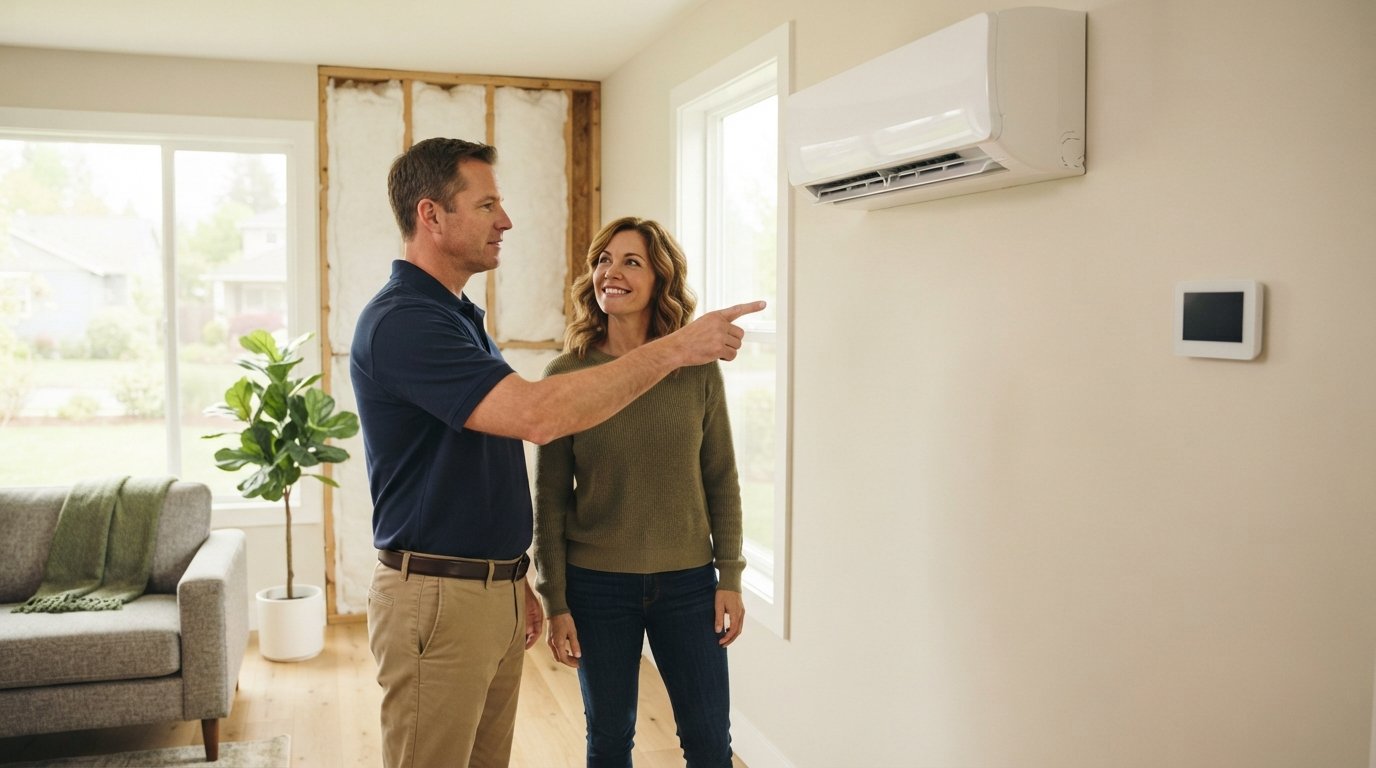
Government Grants For Energy Efficient Home Upgrades
Learn how government grants for energy efficient home upgrades can cut your costs by thousands, covering heat pumps, insulation, and more.
By Adnan Nazir
Learn more about Weatherization for guides, costs, and what to expect.
Compare Weatherization Pros Near You

Enter your ZIP code to compare top-rated local professionals and request free quotes.
Rising utility bills and an aging home envelope often push homeowners toward costly renovation projects. However, the smartest path to a more comfortable living space does not always require paying full price out of pocket. Federal, state, and utility-sponsored programs now offer substantial financial support that can cover everything from new insulation to high-efficiency HVAC systems. Understanding how to navigate these options can turn a daunting home improvement project into an affordable, high-return investment.
The key is knowing where to look and how to qualify. While the term "government grants for energy efficient home upgrades" gets used loosely, the reality involves a mix of direct grants, rebates, and tax incentives. Each program has distinct rules, funding limits, and application timelines. Homeowners who take the time to research their eligibility often find they can complete major upgrades with minimal upfront costs, significantly increasing their property value while reducing monthly expenses.
Federal Funding Streams: The IRA and Beyond
The Inflation Reduction Act (IRA) remains the largest single source of funding for residential energy efficiency in recent history. It created two primary mechanisms: the Home Energy Rebate Programs (administered by state energy offices) and extended federal tax credits. These programs are designed to work together, allowing homeowners to stack benefits for maximum impact.
For example, the Home Efficiency Rebates (HER) program offers point-of-sale rebates that can cover up to 80% of the cost for qualifying insulation, air sealing, and ventilation upgrades, but only for households earning less than 80% of their area median income. Higher-income households can still receive rebates, though the percentage drops to 50% with a cap of $2,000. Meanwhile, the High-Efficiency Electric Home Rebate Act (HEEHRA) provides up to $14,000 in rebates for electrical panel upgrades, heat pumps, and induction stoves for low- and moderate-income families.
These rebates are not paid directly to the homeowner. Instead, they are issued to the contractor or retailer at the point of sale, which means you see the discount instantly. This structure protects consumers from fraud and eliminates the need to wait for a reimbursement check. To access these funds, you must use a contractor enrolled in your state's program. This is where a platform that connects you with pre-vetted local professionals becomes invaluable, as it streamlines the process of finding a qualified installer who knows how to handle the paperwork.
State-Level Grants And Utility-Sponsored Programs
While federal legislation provides the baseline, state governments and local utilities often add their own incentives on top. These programs are frequently updated and can be more generous than federal offerings, particularly in states with aggressive climate goals like California, New York, and Massachusetts. The application process for these state grants is often the most complex part, as eligibility criteria vary widely based on your location, income, and the specific technology being installed.
Most state energy offices maintain a database of approved contractors and a list of active incentives. For instance, a state might offer a $500 rebate for a smart thermostat, while the local utility offers an additional $100 for enrolling in a demand-response program. Combining these with federal tax credits can cover a significant portion of the total project cost. However, the paperwork can be overwhelming. Many homeowners find it helpful to work with a contractor who specializes in energy efficiency retrofits, as these professionals handle the rebate filing as part of their service.
Before you start any work, you need to determine your home's current energy baseline. Many programs require a pre- and post-installation energy audit, also known as a Home Energy Score or BPI assessment. The audit identifies the most cost-effective improvements and provides the baseline data required for program approval. Without this audit, you may be ineligible for the grant, or you may miss out on the highest rebate tier available.
How To Navigate The Contractor Requirement
Almost every government grant for energy efficient home upgrades requires the work to be performed by a licensed, insured, and program-approved contractor. This is not just a bureaucratic hurdle; it is a consumer protection measure designed to ensure the upgrades actually deliver the promised savings. Unlicensed handymen rarely have the certifications needed to sign off on the rebate paperwork, which can void your warranty and leave you with no recourse if the system fails.
When seeking a contractor, prioritize those who are BPI (Building Performance Institute) certified or who hold NATE (North American Technician Excellence) certifications for HVAC work. These credentials indicate a higher level of training in energy efficiency. You should also ask the contractor if they are familiar with your specific state's rebate portal, as some are more experienced with the filing process than others. A contractor who regularly handles these grants will be able to tell you exactly which upgrades qualify and how much you can expect to save.
Specific Upgrades That Qualify For Funding
Not every home improvement project receives government backing. The focus is strictly on systems that reduce energy consumption or electrify fossil fuel-based appliances. The most common qualifying upgrades include:
- Air-source and geothermal heat pumps for heating and cooling, which often qualify for the largest rebates and tax credits.
- Insulation and air sealing in attics, walls, and crawl spaces, typically covered under the HER program.
- Heat pump water heaters, which are far more efficient than standard electric models.
- Electrical panel upgrades necessary to support new electric appliances, covered under HEEHRA.
- Energy-efficient windows and doors, though these usually have specific U-factor and SHGC ratings that must be met.
After selecting the upgrade, you must verify that the equipment meets the Consortium for Energy Efficiency (CEE) highest tier specifications. For example, a standard efficiency heat pump might not qualify, but a cold-climate model with a higher SEER2 and HSPF2 rating will. Your contractor should be able to provide the specification sheet for the equipment they plan to install, which you will need to submit with your rebate application.
The timing of these upgrades matters. Many state programs operate on a first-come, first-served basis until the annual funding allocation is exhausted. Funds often run out by late fall, so it is wise to plan your project for early in the funding cycle, typically January through March. If you miss the window, you may have to wait until the next funding round, which can delay your project by months.
Tax Credits: The Silent Partner
In addition to grants and rebates, the federal government offers the Energy Efficient Home Improvement Credit (25C). This credit allows you to claim 30% of the cost of qualifying improvements, up to a lifetime maximum of $3,200. Unlike a rebate, which is issued at the time of purchase, a tax credit reduces the amount of income tax you owe when you file your annual return. It is a dollar-for-dollar reduction, meaning a $2,000 credit saves you $2,000 on your tax bill.
This credit covers heat pumps, heat pump water heaters, biomass stoves, and insulation. It also covers window and skylight replacements, but only up to a $600 cap, and the products must meet specific ENERGY STAR requirements. The credit applies to the cost of the equipment and the labor for installation, which is a critical detail. You cannot claim the credit for DIY work, as the IRS requires the installation to be performed by a qualified individual. For a comprehensive look at how window upgrades specifically impact your home's value and efficiency, our guide on energy efficient windows hidden benefits offers deeper insight into product selection and ROI.
It is important to track all your receipts and the manufacturer's certification statement, which is usually a signed document from the manufacturer confirming the product meets the required efficiency standards. You do not need to submit this paperwork with your tax return, but you must keep it in your records in case of an audit. The IRS has been cracking down on fraudulent energy credits, so having the documentation ready is essential.
Finding The Right Contractor Through A Lead Platform
The complexity of combining federal tax credits, state rebates, and utility incentives makes contractor selection the most critical decision you will make. A contractor who lacks experience with these programs might quote you a price that is thousands of dollars higher than necessary, simply because they do not know how to apply the available discounts. Conversely, an experienced contractor will build the rebate application into their workflow, ensuring the price you pay is the lowest possible.
Using a digital marketplace that connects you with local professionals can simplify this search significantly. Platforms like USremodel and FreeQuotes.Contractors specialize in vetting contractors and matching them with homeowners based on project scope. When you submit a quote request, you are not just getting a price; you are getting a professional who understands the local regulatory landscape and can guide you through the incentive process. This is particularly useful for first-time homeowners who are unfamiliar with the nuances of energy audits and rebate paperwork.
When comparing bids, ask each contractor to provide a line-item breakdown that separates the cost of equipment, labor, and the estimated rebate amounts. A transparent quote should show the gross cost and the net cost after all incentives are applied. Be wary of any contractor who refuses to discuss rebates or who pressures you to sign a contract before you have reviewed the financing details. The best contractors will often offer financing options for the remaining balance after rebates, ensuring you can complete the project without a massive upfront payment.
Finally, always verify that the contractor is licensed and insured in your state before signing anything. Your local permitting office can provide this information, and you can also check for complaints with the Better Business Bureau. Taking these steps ensures that your home improvement project remains a source of comfort and savings, not a legal headache.