
How to Prevent Contractor Damage During Home Renovation
Protect your home during renovations with proven steps to prevent contractor damage, from documenting conditions to verifying insurance before work begins.
By Adnan Nazir
Learn more about Home Remodeling for guides, costs, and what to expect.
Compare Home Remodeling Pros Near You

Enter your ZIP code to compare top-rated local professionals and request free quotes.
A single careless swing of a sledgehammer can crack a water line, and one missed stud can send a nail through an electrical cable. Contractor damage during a home renovation is more common than most homeowners expect, and the repair bill often lands on your plate, not the contractor's insurance policy. The good news is that most damage is preventable when you combine clear documentation, smart project sequencing, and a few protective measures before the first tool comes through the door. This guide walks you through exactly how to prevent contractor damage during home renovation so your project stays on budget and your home stays intact.
Document Everything Before the First Hammer Swings
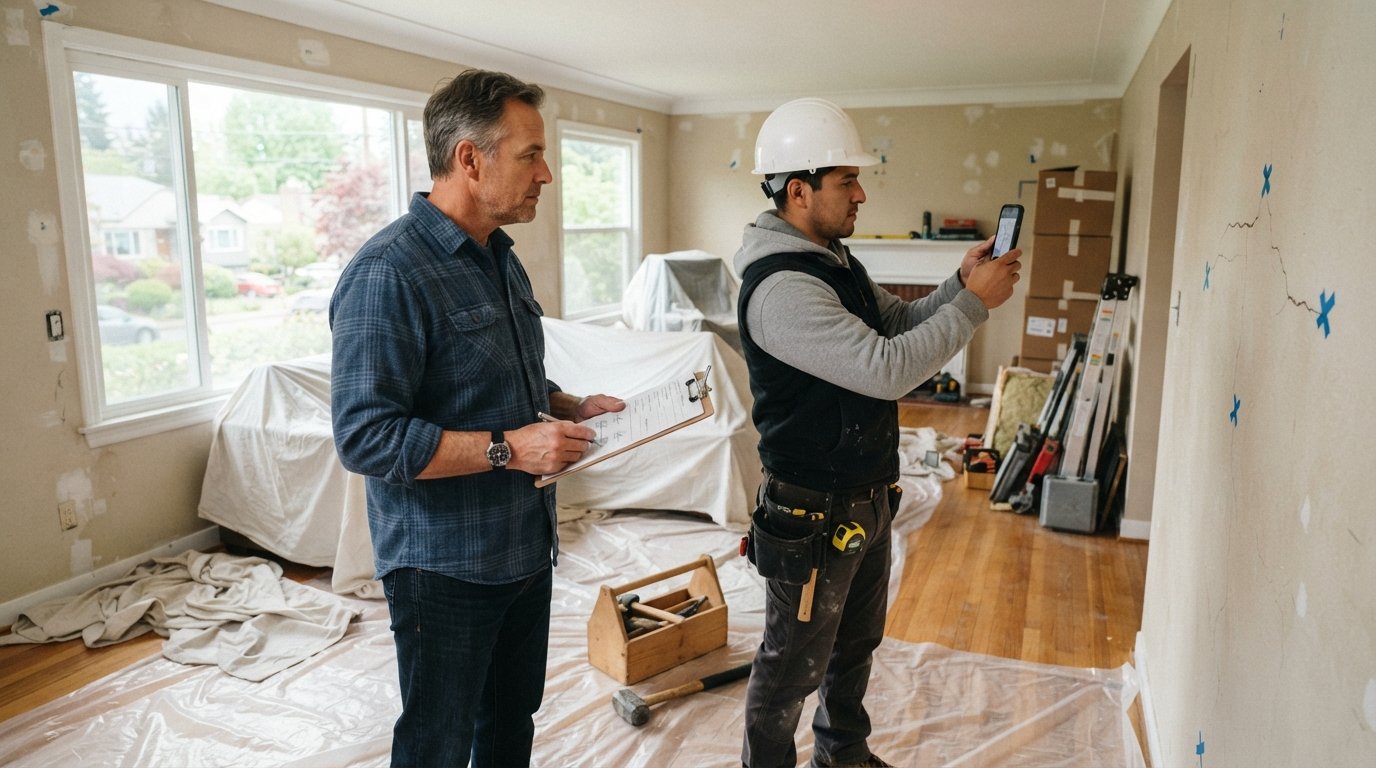
The single most effective protection against contractor damage is a thorough, timestamped record of your home's condition before work begins. This is not about distrust; it is about creating a shared baseline that protects both you and the crew. Walk through every room that will be touched, plus adjacent spaces that could be affected by dust, vibration, or foot traffic. Photograph walls, floors, ceilings, countertops, appliances, and landscaping from multiple angles. Take short videos panning slowly across each room so nothing is missed.
Once you have your visual record, compile a written condition report. Note existing cracks, scuffs, loose tiles, and any pre-existing defects. Have your contractor sign and date this report, and keep a copy for yourself. This simple step eliminates the most common dispute in renovation projects: the argument over whether damage existed before the crew arrived. It also gives you leverage if you need to file an insurance claim or request a repair credit.
Your documentation should also include the project scope and a clear damage responsibility clause. Spell out who pays for what if something breaks. A well-written contract should specify that the contractor is liable for damage caused by negligence, that they carry general liability insurance, and that they will repair or compensate for any damage their crew causes. If your contractor hesitates to sign this kind of agreement, treat that as a red flag. Before you sign anything, it helps to review a solid home renovation budget planner so you understand how damage contingencies fit into your overall spending plan.
Verify Insurance and Licensing Before Work Begins
Insurance verification is your financial safety net. If a contractor damages your home and has no active liability coverage, your only recourse is a lawsuit, which is slow, expensive, and uncertain. Request a certificate of insurance directly from the contractor's insurer, not from the contractor. Confirm that the policy is current, that it covers residential renovation work, and that the coverage limits are high enough to handle a worst-case scenario in your home.
You should also verify the contractor's license through your state or local licensing board. Licensing requirements vary by state, but most require proof of insurance, a passing exam, and a clean disciplinary record. A licensed contractor is more likely to follow building codes and safety protocols, which reduces the chance of structural damage or code violations during the project.
Here is a quick checklist for verifying a contractor before you hand over a key:
- Request a certificate of insurance directly from the insurer, not the contractor.
- Confirm the policy covers general liability and, if employees are on site, workers compensation.
- Verify the license number with your state or local licensing board.
- Ask for the name and contact information of the insurance agent for verification.
- Check online reviews and complaint databases for patterns of damage disputes.
If you are comparing multiple bids, this verification step should be part of your evaluation. A contractor who cannot produce proof of insurance quickly is not worth the risk, no matter how attractive the price. If you would rather skip the guesswork, platforms like USremodel connect homeowners with independent contractors across the country, making it easier to find professionals who carry proper coverage for remodeling and repair work.
Protect High-Risk Areas Before Demolition Starts
Every home has areas that are especially vulnerable to renovation damage. Identifying and protecting these zones before demolition begins can save you thousands of dollars. High-risk areas include hardwood floors, marble or granite countertops, built-in cabinetry, stair railings, and exterior landscaping. Dust and debris also travel farther than most homeowners expect, so consider protecting rooms that are not part of the project but share a hallway or ventilation system.
Use heavy-duty drop cloths or rosin paper on floors and staircases. Cardboard or rigid floor protection boards work well in high-traffic areas. Seal doorways with plastic sheeting and zipper doors to contain dust. Cover light fixtures, ceiling fans, and smoke detectors with plastic bags, but never block vents or cover electrical panels. If you have valuable furniture or artwork, move it out of the work zone entirely, or wrap it in moving blankets and store it in a sealed room.
Exterior protection matters just as much. Mark irrigation lines, septic tanks, and buried utility lines before any excavation or heavy equipment arrives. Protect landscaping with plywood barriers, and move vehicles out of the driveway to avoid damage from falling debris or equipment. A few hours of prep work can prevent the kind of damage that takes weeks to repair.
Set Clear Communication and Site Rules
Damage often happens when communication breaks down. A crew member who does not know which wall is load-bearing or which pipe carries water to the second floor is more likely to cause accidental damage. Establish a clear chain of command and a daily check-in routine. Identify one person on the crew who is responsible for site safety and damage prevention, and make sure that person has your contact information.
Set explicit site rules before work begins. These rules should cover where workers can park, which bathrooms they can use, where they can store materials, and what areas of the home are strictly off-limits. If your project involves a kitchen or bathroom remodel, define a temporary kitchen or bathroom plan so workers are not improvising and accidentally damaging plumbing or appliances.
Communication also means regular progress updates. Ask for a brief end-of-day summary of what was done and what is planned for the next day. This gives you a chance to flag concerns early, before a small issue becomes a major repair. If you notice a new crack or a scratched floor, report it immediately and document it with photos.
Sequence the Work to Reduce Risk
Smart sequencing is one of the most overlooked ways to prevent contractor damage during home renovation. Certain tasks should happen before others to avoid rework and accidental damage. For example, demolition should happen before any new finishes are installed. Plumbing and electrical rough-in should happen before drywall goes up. Flooring should be installed after painting and drywall work are complete, because paint drips and drywall dust can ruin new floors.
If you are renovating multiple rooms, consider phasing the project so that you always have a functional living space. This reduces the temptation for workers to cut corners or rush through tasks, which is when damage is most likely to occur. It also gives you a chance to inspect each phase before the next one begins.
Coordinate with your contractor on a written schedule that includes inspection points. At each inspection, verify that protected areas are still covered, that no new damage has occurred, and that the work meets your expectations. This proactive approach catches problems early and keeps the project moving smoothly.
Handle Damage Quickly and Fairly If It Happens
Even with the best preparation, accidents happen. How you handle damage when it occurs determines whether it becomes a minor inconvenience or a major financial dispute. The moment you notice damage, document it with photos and a written description. Notify your contractor in writing, and request a written response that outlines how the damage will be repaired and who will pay for it.
If the damage is covered by the contractor's insurance, file a claim promptly. Keep all receipts, estimates, and correspondence related to the repair. If the contractor refuses to take responsibility, you may need to involve your own insurance company or a mediator. In most states, homeowners have the right to file a complaint with the licensing board or take legal action if a contractor causes damage and refuses to make it right.
Prevention is always cheaper than repair, but knowing your rights and having a plan for damage disputes gives you confidence throughout the project. A reputable contractor will appreciate your diligence and will work with you to keep your home safe.
Preventing contractor damage during a home renovation comes down to preparation, verification, and communication. Document your home's condition, verify insurance and licensing, protect high-risk areas, set clear site rules, sequence work intelligently, and address problems immediately if they arise. With these steps in place, you can focus on the excitement of your renovation instead of worrying about the cost of preventable damage.