
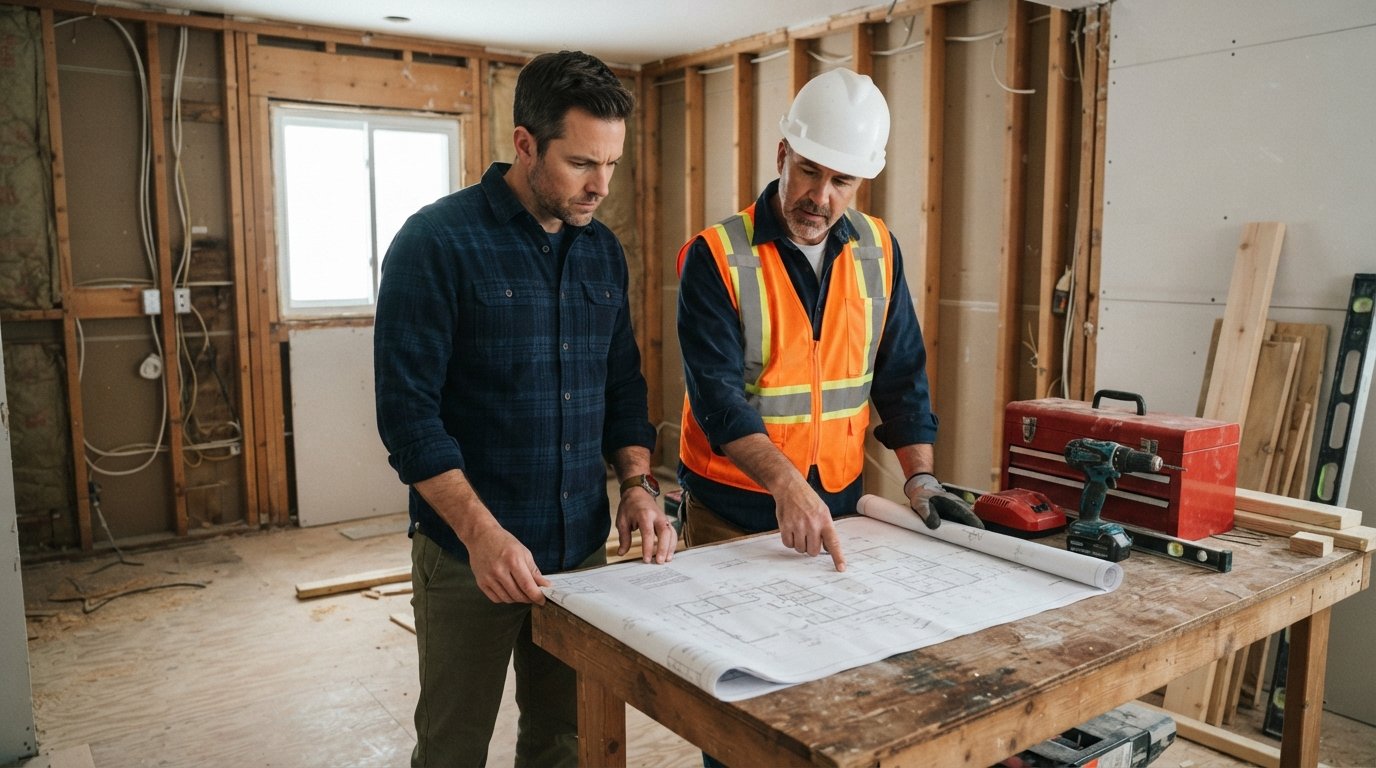
Navigating Building Permits for Home Renovation
Master the permit process with our guide to navigating building permits for home renovation, avoiding fines, and ensuring your project passes inspection.

By Elena John
Learn more about Home Remodeling for guides, costs, and what to expect.
Compare Home Remodeling Pros Near You

Enter your ZIP code to compare top-rated local professionals and request free quotes.
You have the design, the budget, and the contractor lined up for your dream kitchen remodel or that new master suite addition. Then someone mentions the word "permits," and a knot forms in your stomach. It is a common reaction, but navigating building permits for home renovation does not have to be a bureaucratic nightmare. In fact, approaching this process with a clear strategy can save you from catastrophic financial losses, legal headaches, and dangerous structural failures. A permit is not just a piece of paper; it is a formal agreement that your project will meet local safety codes, protecting your family and your investment. This guide will walk you through every step, from knowing when you need one to passing the final inspection.
Why Permits Matter More Than You Think
Many homeowners are tempted to skip the permit process to save time or money. The logic seems simple: if the work is hidden behind drywall, who will ever know? The reality is far more complex and risky. When you pull a permit, you trigger a series of inspections that verify the work is being done correctly, particularly regarding structural integrity, electrical wiring, and plumbing. These checks exist to prevent fires, collapses, and health hazards. Without them, you are gambling with the safety of everyone who lives in your home.
Beyond safety, there is the issue of legal liability. If you sell your home and an unpermitted renovation is discovered, you could be forced to tear out the work, pay expensive fines, or reduce your asking price significantly. Insurance companies are also savvy to this; they often refuse to cover damages related to unpermitted work. If a fire starts in a kitchen you remodeled without a permit, your insurer may deny your claim entirely, leaving you to cover the costs out of pocket. The permit fee, which is usually a few hundred dollars, is trivial compared to the potential cost of a denied claim or a forced demolition.
Finally, permits provide a layer of protection against dishonest contractors. A contractor who is willing to skip permits is likely willing to cut other corners, such as using substandard materials or hiring unlicensed labor. By insisting on a permit, you are demanding accountability. Your local building department will review the plans and inspect the work, acting as an independent third-party validator that the job is being done right.
Decoding the Permit Process: A Step-by-Step Roadmap
While the specifics vary by city and county, the general framework for obtaining a permit is fairly universal. Understanding the stages of this journey will help you manage your timeline and expectations. It is not just about filling out a form; it is a mini-project in itself that requires coordination and patience.
Once you submit your application, the building department will review it to ensure it complies with the zoning laws and building codes. This review can take anywhere from a few days to several weeks, depending on the complexity of your renovation and the workload of the department. You will then pay the permit fee and post the permit on your property, usually in a window facing the street. This allows inspectors to see it when they arrive for the scheduled checkpoints.
The Critical Inspections You Need to Pass
The inspection phase is where the real value of the permit comes to light. Your contractor should call for inspections at specific milestones. If you miss these windows, the inspector may require you to open up finished walls to check the hidden work, which is a costly mistake.
Most renovation projects will require at least three inspections: the rough-in, the insulation, and the final. The rough-in inspection occurs after the framing, wiring, and plumbing are in place but before the walls are closed up. The insulation inspection verifies that the correct R-value and type of insulation are installed. The final inspection confirms the project is complete and safe for occupancy. For larger projects, you might have additional inspections for foundation, roof sheathing, or mechanical systems.
If an inspection fails, do not panic. The inspector will provide a detailed list of corrections that need to be made. Your contractor should address these issues promptly and schedule a re-inspection. This process is designed to ensure quality, not to punish you. Remember, the inspector is your ally in ensuring the structural integrity of your home, so treat them with respect and ask questions if you do not understand a specific requirement.
When Do You Actually Need a Permit?
One of the most confusing aspects of navigating building permits for home renovation is determining which projects require them. The rules are not always intuitive. While a large addition obviously needs a permit, a simple flooring upgrade might not. However, almost any project that involves altering the structure, electrical system, plumbing, or HVAC of your home will require one. This includes moving a load-bearing wall, relocating a sink, or installing a new water heater.
Here is a quick breakdown of what generally requires a permit versus what does not, but you must always verify with your local building department:
- Usually Requires a Permit: Structural changes, adding or removing walls, electrical rewiring, new plumbing lines, roof replacement, window replacement (if changing the size), and installing a new HVAC system.
- Often Exempt: Painting, installing new flooring (like laminate or tile over existing subfloor), replacing cabinet doors, installing countertops, and minor fixture swaps (like a new faucet that connects to existing water lines).
- Ambiguous Cases: Replacing a water heater, installing a backup generator, building a deck lower than a certain height, or finishing a basement. These often hinge on local code specifics.
Before you start any work, make a phone call to your local building department. Describe your project in detail and ask if a permit is required. They are usually very helpful and happy to clarify the rules. This simple call can save you from a world of trouble down the line. If you are working with a contractor, they should also know the local requirements, but it is in your best interest to double-check their claims.
Budgeting for the Hidden Costs of Permits
Permit fees are rarely a flat rate; they are often calculated based on the value of the work being done or the square footage of the project. For a major renovation, this fee can run into the thousands of dollars. It is crucial to factor this into your budget from the very beginning, alongside other often-overlooked costs like design fees and material waste. If you fail to budget for these expenses, you might find yourself short on cash mid-project. To get a complete picture of your financial exposure, review our guide on managing unexpected costs during home renovation.
Beyond the permit fee itself, there are other hidden costs. If your plans require a structural engineer to stamp drawings, that can cost anywhere from $500 to $2,000. You may also be required to pay for a survey of your property. Additionally, some municipalities charge separate fees for water and sewer connections or for impact studies. When you are comparing bids from contractors, ask them to include all permit and inspection fees in their proposal. A low bid that excludes these costs is not a bargain in the end.
Another financial consideration is the potential increase in your property taxes. When you get a permit for an addition that adds square footage or a finished basement, the county assessor will likely re-assess your home's value, resulting in a higher tax bill. This is not a one-time fee, but a recurring annual cost. It is a factor that many homeowners overlook when calculating the true return on investment for their renovation.
Working with Contractors on Permits
The best contractors have a streamlined process for dealing with permits. They know the local codes, have relationships with the inspectors, and understand how to fill out the paperwork correctly to avoid delays. When you are interviewing potential contractors, ask them directly about their permit strategy. A reputable professional will have no issue with pulling permits; in fact, they will insist on it to protect their own license and reputation.
Beware of any contractor who suggests you skip the permit to save money or time. This is a massive red flag and a sign that they are not a professional. In most jurisdictions, the homeowner is ultimately responsible for ensuring permits are obtained, even if the contractor is the one doing the work. If you allow a contractor to work without a permit, you are legally liable for the violation, not them. This means you could be fined, and you would be the one to deal with the consequences of an illegal structure.
Here are a few questions to ask your contractor about permits before you sign a contract:
- Who is responsible for pulling the permit, and will this be listed as a line item in the contract?
- Who will schedule the inspections, and how will we handle a failed inspection?
- Are you licensed and insured to perform this specific type of work in my municipality?
Once the project is complete, make sure you receive the final certificate of occupancy or a signed-off permit from the inspector. Keep this document in your records. You will need it when you sell your home to prove that the work was completed legally and passed all necessary inspections. If you lose it, you can usually request a copy from your local building department, but it is much easier to keep it in a safe place from the start.
Fast-Tracking Your Approval
Waiting for a permit can feel like a major drain on your project timeline. However, there are ways to speed up the process without cutting corners. The most effective method is to submit a complete and accurate application the first time. Missing documents, vague drawings, or incorrect fees are the most common reasons for delays. To get this right, you may need to hire a professional designer or architect to create detailed plans, as most building departments require specific technical drawings to evaluate your project.
Another tip is to schedule a pre-application meeting with the building department. Many municipalities offer this free service, allowing you to discuss your project with a plan reviewer before you formally submit. This can help you identify potential issues with your design, such as a setback violation or a height restriction, before you pay for a full permit application that is destined for rejection. It is a proactive step that can save you weeks of back-and-forth communication.
Finally, consider using an expediting service. These are private companies that specialize in navigating the permit process. They charge a fee to handle the paperwork, track the application, and communicate with the building department on your behalf. While this adds an upfront cost, it can be worth it for complex projects where time is of the essence. For most homeowners, however, a well-prepared application submitted by a good contractor is the fastest and most efficient path forward.
The process of navigating building permits for home renovation is a test of diligence and patience. It requires you to be proactive, ask the right questions, and understand the rules of your local jurisdiction. The payoff is immense: peace of mind, a safe home, and a renovation that holds its value. If you are ready to start your project, getting a free estimate from a local contractor who understands the permit landscape is a wise first step. Platforms like Repairmen can connect you with vetted professionals across the country, and obtaining a quote is often the first step in a successful partnership.
By treating the permit process as an integral part of your project rather than an annoying obstacle, you take control of your renovation. You are not just building a new kitchen or bathroom; you are building a safer, more valuable asset for your family. Take the time to do it right, and your future self will thank you.